Another dotcom bubble?

It’s another one from the vaults. I wrote this in November 2013. Shocking, actually, to see how – in the intervening five months – so many things have changed and moved on. What has stuck – and grown, if you like – is the feeling that Twitter and WhatsApp and the rest simply aren’t worth the stupid sums being paid for them. We’ll see.

$11.2bn. As much as $30bn. As I write, now around $20bn. Oh, yes, dear reader, you know what I’m talking about. And still it doesn’t make a profit. Meanwhile, in what was quite clearly an attempt to start making a profit, I receive a promoted tweet from @BMWUSA asking me to show my support for Team USA, as we approach the winter Olympics.

Erm, an’ thank you most kindly, but why, exactly, would a Welshman with English overtones, resident in London, wish to express support for Team Merca? I’m sure they’re all lovely, with their splendid muscles and super hair and dazzling teeth, but – and it’s a small one, I know – nit-picky almost – they’re from a completely different country to which I have no links whatsoever, unless you count my ancestors’ compatriots’ vain efforts to shape it up a little.

So, a poorly targeted promotional tweet – well, I’m not the target market for much of the TV advertising I sit through (too lazy to reach for the clicker, d’you see), and this is simply the socially medieval equivalent.

But, of course, it isn’t. Because social ain’t TV – there’s no Strictly Come Tumblring or I’m a Celebrity Follower, Unfriend Me! – and promotional tweets aren’t big budget, glossy items, with soundtracks and celebrities and (this is most important, pay attention) paid for in advance.

(When I make this point, I’m thinking about the Louis Vuitton ‘L’Invitation au Voyage’ ad with David Bowie (or is it Tilda Swinton) and Arizona Muse. Not the Cillit Bang ‘Barry Scott in a big purple fighter jet’ ad with Barry Scott.)

No. Promoted tweets are cheap as chips for the tweet promoter. As long as I, the recipient of the promotweet, do not click ‘pon said spamulous item, nor neither follow the issuer of same, then the spamuliser pays nowt. Not a brass farthing. Which, clearly, means that targeting simply isn’t an issue, and is why I’m happy to call this stuff spam.

So now Twitter’s under increasing pressure to demonstrate its revenue model and to show some sign that it could, in future, turn a profit and reward the enormous valuation that’s been put on it.

This means, I’m afraid, considerably more of these poorly-targeted promoted tweets. Is it just me, or can anyone else see a flaw in a business plan that relies on the social equivalent of the Nigerian email scam for revenue generation?

Facebook saw an immediate 16% dip in its share price when ‘senior executives’ revealed that young people were leaving the site – in fairness to it, however, its share price recovered once it was realised that the audience hole was being backfilled with the young people’s parents and grandparents.

But the point remains made – young people, the valuable Holy Grail audience, trendsetters, early adopters, rainmakers – don’t like being sold to through channels they consider they ‘discovered’ or ‘invented’.

They don’t like their feeds being abominated with spamulous commercial messages. They – making a little leap here – don’t like promotweets. Which is, arguably, why the current valuations of various social media are a wee smidge on the high side.

Now we hear about £8bn for Dropbox (actually, I can see why Dropbox might be worth something) and Pinterest securing funding that would value the enterprise at £3.8bn, despite the fact that it has only recently begun to clarify its business model.

I think it’s clear that I don’t think much of social media as marketing or promotional tools. There are too many gurus telling you how to do, and not enough do. The Emperor is risking risqué with his lack of vestements.

But what is increasingly scary is that no-one seems to remember the rush of the lemmings into the tech bubble of the late nineties and what happened in March 2000.

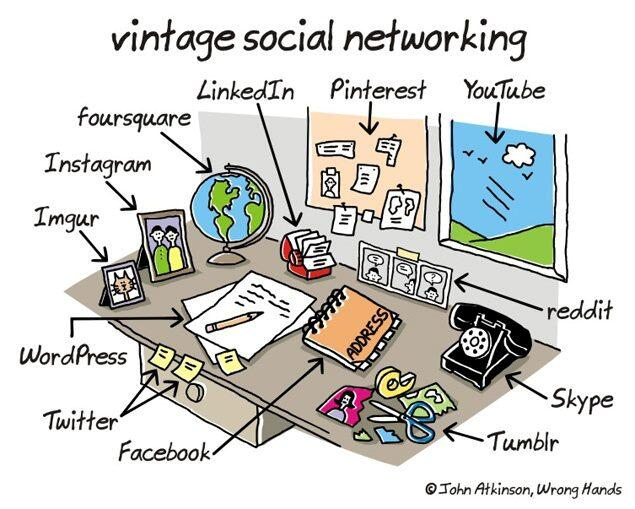
One from the vaults……….

I wrote this some time ago, for my column. Actually, it’s not a column. It’s three columns and a full page. I know, I know – how do I do it. Every month, you say? Yes. Where is the fecund wellspring of ideas that I must be drinking from? Questions, questions. Read! Enjoy. Or not. Your choice.

Readers, I gasped in disbelief and my goblet of schadenfreude(*) briefly ranneth over as I learnt that ‘Lego Group actively encourages all its senior management to sit exams about social media’. Is this one of the building blocks of their communications strategy, d’you think? (Ba-dum tish.)
It’s all driven by Lego’s director of social media, who must have the gravitas of a lead balloon, the tenacity of a just-dumped limpet with emotional issues and the persuasional ability normally associated with a large man possessed of a gun. And I assume this because Lego’s senior management are not sitting ‘an exam’ – no, as you may have noticed (not much gets past you, I know) it’s ‘exams’.
Genuinely – I despair – on umpteen different levels. What would you fill one social exam with – never mind several exams? Who – in a ‘senior management role’ – would have the time to do this? Who – in a ‘senior management role’ – would, for one moment, consider it a good idea? Who – in a ‘senior management role’ – having been inveigled into taking one exam, would be swivel-eyed loony enough for more?
All that being said – he wrote, turning on a dime – I can see the benefit of trying to teach senior management to get a message across in 140 characters. It would have the dual effect of a) generating appreciation for the fine, and necessary, art of brevity and b) demonstrating what a completely pointless comms tool Twitter actually is.
And, of course, there still isn’t much in the way of alternative. Again, you lot probably came across this weeks ago, but I thought it resonant. It’s one of those internet jokey things – like laughing cats, and dancing babies, but with words and lists – and it attempts to define social media using a doughnut metaphor. (This could all go horribly wrong, I know.) Anyway.
Twitter = I’m eating a doughnut. Facebook = I like doughnuts. Foursquare = this is where I eat doughnuts. Instagram = here’s a photo of my doughnut. YouTube = here I am, eating a doughnut. LinkedIn = my skills include doughnut eating. Pinterest = a doughnut recipe, yay. G+ = I’m a Google employee who eats doughnuts.
Clearly, when what was once hailed as THE socio-economic phenomenon of the 21st century is downgraded to wordplay involving doughnuts, when The Social Network is increasingly abandoned by the young people that it was using to create revenue through advertising – you begin to wonder.
When the slightly-covert appeal of Tumblr is stripped away by Big Purple’s megabucks and commercial focus and analysts question, on the day of the announcement, whether Tumblr actually has the potential to make any money – what you begin to wonder is whether the smoke is drifting and the mirrors are getting a bit smeary.
And, to my mind, there’s a big issue brewing – not so much on the horizon, rather more ‘lookout-yelling-iceberg-from-the-bow-of-the-Titanic’ proximitous – that could forever change (as well as limit) the way social is used and, importantly, can be used. Unsurprisingly, it’s privacy.
Zuckerberg said ‘privacy is no longer the norm’ and with regard to Leveson, to McAlpine and Bercow and in the cases of April Jones and Tia Sharp, like it or not, he’s probably right.
Not all cases directly related to social media, but all highlighting the need for change in how people use social media (it’s not just you talking to your mates, it’s open and indelible), and for greater control on the individual’s use of the internet (encompassing email and social).
And if Zuckerberg doesn’t think privacy is the norm, he should have no problem in handing over your data to the authorities. Changing forever the way people view and use social, and what they share.
And why is Prism trending? *innocent face*
(* My job isn’t perfect, but at least I don’t work at Lego.)

Crime and the Social Media Generation

Yes, blog trotters all, social media are fuelling crime statistics! Someone call the Daily Mail! Middle England needs to know! Paul Dacre needs to froth at the mouth! Actually (calm down, dears, it’s only a newspaper article) it’s been reported that more than 1,000 criminal offences involving Facebook came to light last year. See here!

Which provides me with the perfect excuse to post this article that I wrote recently. Who knows whether it’s been published. Perhaps I simply write stuff and the recipients are just too kind to tell me that it is quite startling in the limited nature of its quality. No. Couldn’t be that. Anyway.

I thought I’d make a list of the good uses of a social medium – as-it-happens updates, time-sensitive information, news alerts – and the bad uses – cuddly kittens, selfies, what you had for breakfast, lolz – and see if, anywhere, on either of those lists, was ‘notifying the police either following the committing of a crime or with the suspicion that a crime is about to be committed’. Do you know, gentle reader, it wasn’t?

So it was with a certain degree of slack-jawed amazement that I read about one particular incident, in which a woman, alone in a carriage on a train to (I believe) Southampton, became aware of a drunken male, getting all leery and inappropriate. She tweeted same, and, on arrival at Southampton (Parkway, probably) said drunken lech was promptly arrested by the waiting police. It is, apparently, not the first time that such a thing has happened – the forces of law and order being alerted to proceedings of a criminal nature all through the medium of twat.

And indeed, in one sense, why not? It’s a communication medium after all, and it seems police forces have Twitter feeds, and if you can’t remember @herculepoirot, then there’s always the distinct possibility that one of your followers will. But, and here’s the thing, why didn’t our lady on the Southampton Parkway Express a) call the police and/or b) move carriages? What convinced her that the best way to deal with this situation was to come over all twitty?

My suspicion is that she was probably a phubber. Which, for those of you who’ve been living under stones in the Gobi for the past four to six weeks, is someone who – in a face-to-face situation – snubs the other person by checking their device for messages, making or taking a call, or being antisocial with social. I conjecture that this person was so plugged into her device that speech or movement were secondary options to that of posting a tweet. It was simple instinct.

Regardless, the end result was the desired and correct one. But it did make me wonder whether – in a broader sense – we’re seeing the rise of another phenomenon of social which I shall call (because I don’t think anyone’s got here first) the Tweet Potato.  The Tweet Potato (not wholly dissimilar to the tuber of the couch variety and its televisual predilections) is one for whom all the world is contained within social and thus there is no earthly reason to engage on any other level.  Which, now I think about it, fairly accurately describes the thinking of an entire herd of social media gurus………..

The story of the police and the tweets, of course, delivers us nicely to a far more serious issue that threatens social media (reminding ourselves that there are, really, only two social media) and destroy any commercial value that they may be perceived to have had. The irony is not lost that, while the messages have brought the law down on the miscreant, the medium cannot (will not?) do the same.

Again, for those of you under that stone in the Gobi, we’re talking about the recent spate of Twitter threats, which escalated to the point where Stella Creasy MP was sent a picture of a masked knifeman, and other high-profile women were sent bomb threats. Several days later, Twitter said abuse was ‘simply not acceptable’. Apparently the website has also clarified its rules on abusive behaviour and put extra staff in place to handle reports of abuse.

What it hasn’t done, as far as I can see, is pass the trolls’ data to the authorities. Is this because it can’t – or is it a misguided respect for privacy? Either way, it reveals the dark underbelly of social and its utter lack of regulation. On this basis, would you want your brand associated with social media?

We Need To Talk About Privacy

I tried, rather ineffectually, probably, to address this point recently and, because I had a word limitation, didn’t really do the topic justice. What I was trying to get at, in a ham-fisted and blancmange-minded way, was that our relationship with privacy has changed, and is being changed, irrevocably, and no-one has really seemed to notice.

At least I assume that’s the reason for the quite awe-inspiring levels of apathy being displayed in relation to doing something about it. (And yes, I’m in there with the awe-inspiring apatheticals and in some ways, I’m worse because here I am writing about it, without the slightest intention of marching on the offices of Facebook or MI5, brandishing a banner reading ‘What do I want ? Privacy! When do I want it? Not going to tell you!’)

And speaking of Facebook, which I was, I read just last night of what it takes to get into their office as an outsider. Amongst other things, it involves signing  a multi-page and multi-section confidentiality agreement. Lest any of us have forgotten, this is the same Facebook that was founded – and is run – by the odious boy turd Zuckerberg, he of the belief that ‘privacy is no longer the norm’. Unless you’re him, or happen to work for his company, in which case, privacy is rather more than the norm, seemingly.

Privacy is becoming the province of the privileged. It’s something you’ll end up having to pay for, and it’ll be the few that can afford it. And how did this happen – grandchildren will asked their wizened, online grandparents – and the answer will come back in a regretful whisper ‘because we didn’t value it and we gave it away’. And – as I will take delight in exemplifying later – we’re doing it even though we know we’re doing it and even though we’re being told that we’re doing it, by those who are facilitating the doing on our behalf. See what I mean about apathy?

But quickly, before I get on to what is for me, anyway, the almost illicit pleasure of stripping the sequins off of social media (using social media in a very loose sense here), my target today – lovely blogtrotters mine – being the so-many-levelly ridiculous Snapchat, I just wanted to have a quick dig around the issue of privacy, just so posterity knows what I was on about.

Privacy works two ways, especially when it comes to the ubiquity of t’interweb. And in both ways, it is increasingly going horribly wrong – and for all sorts of different reasons. Even I cannot blame social media themselves for the avalanchical erosion of what used to be a valued and fiercely-protected right, no – it’s a combination of corporate profiteering, uncontrolled new technology (I’ve always maintained that the internet should have been regulated way back in the early ’90s – blame the media hippies) and the absolute propensity for being a complete cretin that characterises a (very) large proportion of the world’s population.

So privacy’s gone, because people give it away via a lack of understanding of what they’re doing, and the ramifications that their actions might have (I doubt Sally Bercow’s reading – she’s probably still wondering how she’s going to raise the money to pay McAlpine). Privacy’s gone because some people believe that, because others have started on the road to giving it away, it’s OK to take it (as amply evidenced by Leveson). But privacy still exists for those who arguably shouldn’t have it – the viewers of illegal websites that go on to commit horrific crimes – they have privacy not because they’re not giving it away (by using a computer with an individual IP address, you’re identifying yourself, or at least your whereabouts) but because – for one reason or another, the ISPs don’t want to share that data with the authorities.

All cock-eyed, d’you see. Mental. Privacy needs to be addressed. Maintained for those who will miss it later – no matter how hard they try to give it away – and stripped from the undeserving. Clearly, one solution would be to turn off the internet.

Pause.

Another solution would be to have some sort of global recognition system – a password unique to you – that you’d have to submit to before accessing the internet. The problem with that, obviously (and as was gleefully pointed out to me by someone who thought they’d seen the fatal flaw in my argument) is that you’d really have to keep your unique identity very private indeed, or some horrible gnoll would be masquerading as you before you could say ‘brazzers’.  But for those of us who are sensible enough manage to keep our passwords and PINs secret, so what’s the deal with a unique password. And even if enough deeply flawed people prove that it’s not going to work, then how about biometrics. Just thinkin’.

Anyhoo. Snapchat. Well, apart from sounding like one of those dodgy premium ‘phone lines that are advertised on the late night telly when you’re watching (or is it just me) Blade III on Five Star, it’s another photo sharing site. But what makes it quite mind-bogglingly ridiculous is that the pictures shared on Snapchat disappear after 10 seconds. Alright (you may say) this (ostensibly) means that the really stupid picture you took of yourself after eleventy-nine tequilas, and then sent to all of your contact list, including (d’oh) your boss, disappears. Phew. What a relief. Not like the very same picture that you posted to Facebook. Ooops.

But. And here’s the whole privacy schtick, in both its forms. Because if the pictures (ostensibly) disappear after 10 seconds, what’s to stop you posting stuff that even you, in your addled state, might have considered a bit de trop before? Yes, Snapchat is fuelling the rise of the ‘selfie’. (And, blog snorkellers mine, if you don’t know what a selfie is, then – well – google it. Stop! Not if you’re at work.) Apparently, 54% of Snapchat users in the UK have received an ‘inappropriate picture’ – and the mind literally boils over. More privacy being given away – in the simple belief that whatever you’ve shared won’t be  available after 10 seconds has passed.

Ah. Yes. Sorry. In a message to users, the company responded “If you’ve ever tried to recover lost data after accidentally deleting a drive, or maybe watched an episode of CSI, you might know that with the right forensic tools, it’s sometimes possible to retrieve data after it has been deleted.” Which means – and I’ll spell it out for the hard of thinking – that your image doesn’t disappear after 10 seconds. Not completely. No, it’s still retrievable from a server somewhere near Palo Alto.

So, thanks to Snapchat, we have ordinary people in the grip of internet Tourette’s sharing far more stuff that they may have done previously, even though they’re being told, quite clearly, by the purveyor of the medium, that the stuff they’re sharing, while it (ostensibly) disappears from their (and their contact’s) devices after 10 seconds, is actually being stored somewhere. And the medium – in this case Snapchat – is saying that it would take a CSI investigation to find it, even though some of it may be so out of the park that it should, actually, be sent directly to Interpol/the FBI.

Do you know, I was right to suggest turning off the internet. Until the human race, as a whole, is mature enough to deal with it.

It’s Such A Fine Line Between Stupid And….Er…Clever

And I find myself experiencing an echo of the dilemma that faced Nigel Tufnel and David St Hubbins (St Hubbins – the patron saint of quality footwear) in that meisterwerk of the filmmakers’ oeuvre ‘This is Spinal Tap’, when I read this:

Social media nonsense

This – and I simply had to scan it, to display it in all its awfulness/brilliance – is taken from the Metro, an ubiquitous free morning paper of no renown whatever, that recycles news from the papers of the day before, although occasionally breaking an overnighter, its sole purpose being to occupy the dreary commute of (and here it gets interesting) literally hundreds of thousands of drone workers, every single day. This is an extraordinarily influential organ – getting people on their way to work, just as their brains are gunning up through the gears to their normal default velocity of barely-controlled-fury miles an hour.

Which makes this work of genius/idiocy all the more concerning. Someone might take it seriously. It’s printed on the business pages. Someone vaguely influential might read it before their inbuilt b*ll*cks detector has properly come on-line. Someone might take these ideas away and try and do something with them. Someone might – heaven forbid – promulgate the teachings of this clown Taylor. (Yes, it may, indeed, be a fine line between stupid and clever, but I have made my decision. I do not feel that David Taylor of 2010Media has come anywhere near crossing it. This is not his Rubicon. He is stuck in Stupidstan and has no means of getting to Cleverica.)

Where to start? No, David, social media are not specialist marketing tools. This has been amply demonstrated by the failures of massive companies like Pepsi, and Ford, and Dell to make any real correlation between social media and sales, and to create any meaningful revenue streams from social media. The only people who claim that social media are marketing tools are the charlatans that prey on the unwary and the foolish, selling the modern-day equivalent of charms and amulets guaranteed to turn base metal into gold and animate the inanimate. Are you a charlatan, David?

The point is, actually, well-made – if you’re having a conversation with a customer, then you don’t leave it to the work-experience lad to conduct that conversation, or decide what to say. But it’s a statement of the bleeding obvious. What’s dangerous is the assumption that you might ‘want your Twitter feed to sing and your Facebook page to be well(sic)liked’, implying that you somehow are obliged to have both of those items. Guess what? You’re not. You don’t have to use either of these media – it won’t make a blind bit of difference. Sure, there are some companies and brands that might wish to consider using social media as additional communications tools, and might be advised to, but for them somehow to be obligatory is nonsense.

And finally, if you want to be taken seriously, then have an eye to your own brand and corporate reputation. Just because you’re called Taylor, David, doesn’t mean that you should, or that you have to, have an alliterative title. Is your Twitter feed entitled @Taylor’sTwats? I suspect it isn’t. But ‘Taylor’s Titbits (fnaar fnaar) with David Taylor’ is arguably as close as you’re going to get.

The Kiss of Death – Yahoo Promise Not To Screw It Up

So a truly enormous ’nuff respec’ (as I believe the young people would have it) to David Karp (who’s making ‘Koi’ jokes now, eh?) for getting Yahoo to pay a truly staggering £750m for his web creation, Tumblr. Yes, I realise that, in the great scheme of it all, when Glencore and Xstrata are talked about in hushed £76bn tones, that £750m is loose change, but – d’you see – here’s the thing – Tumblr, with all its 102 million blogs and 44.6 billion posts, doesn’t actually make any money.

In the aftermath of the Yahoo acquisition announcement, one analyst actually said that it was hard to see how it would (despite being data rich and capable of providing loads of information about its, mostly young, users). I thought that was a bit naughty of said analyst – mostly, they hold their tongues on this topic, at least until the smoke has cleared, for fear that it will all unravel. As well it might because, and maybe it’s just me, the way you’d normally value a company is on a multiple of its earnings. And if it doesn’t earn anything, well – you do the math. Or not. Because, of course, there isn’t any math to do.

In the meantime, while we’re pondering how nothing can be worth hundreds of millions of dollars, and Mr Karp is sitting in his bare garret in wherever it is (‘I don’t own any books’ he said – go figure) counting his couple of hundred million dollars and – apparently – not wondering what to spend it on (am I alone in finding it deeply sad and slightly suspect that a 26-year old with $200m, even if he is called Karp, is not, for example, buying a swimming pool and filling it full of Puligny Montrachet and inviting his girlfriend to ‘come on in, the white Burgundy’s lovely’?) the users of Tumblr are bemoaning the site’s apparently inevitable fate.

“A white-hot poker into the woodwork” was one such comment, although Tumblr and Yahoo are not, of course, made of wood, and even if they were, a white hot poker is not something you’d necessarily plunge into the woodwork, a chainsaw being that much more effective when dealing with woodwork, but you have to admire the sentiment as you do the simpler ‘Tumblr’s going to suck’. But how do they know? From what I know of Tumblr, I think it’s pretty ‘sucky’ (is that a word?) already.

I do note that Yahoo are talking about ‘light touch advertising’ – which doesn’t sound good – but I’m at a loss in trying to understand why – with 300 million unique users, people somehow think of Tumblr as being independent and in a way ‘theirs’. It’s not. It’s a commercial concern – or Yahoo would like it to be – and just because Big Purple has bought it, does not mean it is going to change significantly. They’ve promised that Fish Boy will remain CEO and his team will continue to run the business – this, also, does not mean that it is going to stay significantly the same. If you see what I mean.

Oh – and to my great joy, at least one pundit left the word ‘social’ out of his descriptor, referring to Tumblr simply as ‘media’.  Or maybe it was a typo.

Social Media’s New Low

Here, blog trotters mine, is a leetle quelquechose that I wrote for a magazine recently. Yes. That’s right. I am a columnist. But I have only written three. Not five. (Keep up, keep up.)

There are not many things that make me seethe, gentle reader, but one of them is the taking of credit where credit is most definitely not due. And so it was when the social medians (I’m presuming that ‘median’ is the collective noun for the black arts of the social medium – implying that they’re by no means the worst thing, but also nowhere near the top either) claimed responsibility for the frankly awesomely successful launch of David Bowie’s latest oeuvre.

You see, thing is, what kicked it all off was the design of a symbol. A white square. A white square which – if it needed saying – was superimposed upon the cover of a previous album, one which was recorded when The Thin White Duke was still Thin and White and not the The Slightly Orangey Duke of Edinburgh that he has now become.

The white square was pasted over posters around the world (real posters in real time, chaps) by fans. Bowie’s people made a movie (with Tilda Swinton, who apparently looks a little like a young David Bowie, if you don’t know what a young David Bowie looks like). Print advertising featured lyrics from Mr Bowie’s back catalogue. The rarely-giving-interviews Iman, er, gave interviews.

Those nice people at the V&A are staging a Bowie retrospective (purely by coincidence, obviously). Thousands of journalists all over the world (yes, I’m including those getting’ bloggy wid it – for bloggery is not social media) dedicated column miles to the launch. Oh – and that Mr Bowie? He’s a diamond, dog. (See what I did there?)

From where I’m sitting (overlooking the Tate & Lyle factory in Newham, since you ask) this has all the hallmarks of a well executed communications campaign, leveraging the benefits of profile, influence and financial clout, across a broad gamut of media types. To claim, glibly, that it woz social wot won it, is to miss the point with a purblind disregard for reality that beggars belief.

OK – so I’m being provocative and – not for the first time – I can hear the rising howls of derision from not-far-from Old Street. (And is that the tell-tale spoingy sound of pitchforks?)

Yes, the white square symbol might not have gained traction so quickly had it not been for Twat and Book, and would we have known about globally white-squared posters so rapidly had it not been for Instagram and Pinterest (not that Instagram and Pinterest are social media per se – think of them as a more interactive version of holiday snaps, football card swaps, or stamp collections)? Had it not been for YouTube, would we have seen the ickle film featuring that man who looks a lot like an old Tilda Swinton?

I take all of this on board. Yes, I get it. But I come from a time BSM (before social media) and while it might have taken a bit more effort, all of it could have been achieved without social (and without a frankly pointless app that allows you to post a white square over your own face.) (/headinhands/ Over your own face. /headinhands/)

There was a time when the Tilda Bowie movie would have been shown on TV, and you’d have had to wait up all night for it. A time when you’d have simply woken up to find white squares over everything (as a result of global overnight fly-posting).

A time when all would have been revealed with massive simultaneous launch events on however many continents there are these days. It would have taken real effort – on the part of both promoter and fan – and would have been that much better for it. (Obviously,  Iman would still have given interviews and the V&A would still be doing a retrospective.)

So step away from the credit, social media, and no-one will get hurt. And no, as someone connected with all this claimed, this does not make social a valid ‘business and sales tool’.

When Two Become One – Social Media and the Abuse of Language

Boom, snorkellers mine! Or is it ‘boosh’? Recently I had my faith in ‘boom’ as the young person’s emphatic of choice somewhat shaken when the young person I use as my ‘young person barometer’ opted for the latter. But it is possible that said young person was still coated in fall-out from the Jack Black oeuvre ‘Gulliver’s Travels’, where Mr Black does, in fact, use ‘boosh’ to denote triumph and satisfaction. Which then begs the question, did he use ‘boosh’ because he is American? Or because it was a family movie? Or both?  I will admit to worrying slightly about ‘boom’, as I suspect it has overtones of ‘gangsta’. But, and indeed, hey – that’s the way I roll.

Which digression leads us nicely into the theme of today’s meander down language lane. Oh yes, syntaxmen, grammarians and semanticleers, another excursion into the verbiage. So, those of you who’ve been here before (wind whistles round an empty, cavernous space and a small, adolescent tumbleweed rolls gently into the dusty distance) will know that one of my greatest bugbears is the abuse of language – whether that’s language used wrongly, or words that are made up, slapdash errors or mistakes that have become so commonplace that they are now practically accepted as part of the language they undermine. I refer, of course, to apostrophe’s.

The other thing that makes me seethe, of course, is social media. Now – and before anyone starts – I am not a social media denier. How can anyone be a social media denier? I am someone who does not believe that social media is the be-all and end-all. I see no reason for there to be a social media industry. I have no time for social media gurus. I do not believe that social media add any real value whatsoever, and I remain convinced that they are practically useless in any sort of commercial (sales and marketing) environment. At best another set of media for communications purposes, at worst, dangerous, misguided and damaging (for a brand or organisation, anyway). Shallow, one-dimensional and self-obsessed – that’s social.

So imagine my joy when I came across this: “We have learned through experience tweeple don’t like brands jumping in if they have chosen not to include them. It could cause a black lash especially if they are out spoken. It is strange but they don’t like being watched even though
it’s public forum.

Do the users of Twitter know they’re being called ‘tweeple’? Do they call themselves ‘tweeple’? Are the Tweeple the inhabitants of Tweetville? If there are many Tweeple, are there individual Twersons? Does anyone have any idea how much this makes social media seem like a figment of the imagination of Dr Seuss and one that makes even less sense than a portion of green eggs and ham? What, social medians, are you thinking of?

I am a guardian of corporate reputation by profession. Something I’ve learnt is that, if you want to be taken seriously, you don’t give yourself a ridiculous name. It takes a long time and a lot of effort before you can start being jokey with your brand, and even then, the jokes have got to be clever and make people think. Or, of course, you can start out with a ‘whacky’ personality (Innocent Drinks) but even then it needs to be thought through to the nth degree. In this case, you’ve got a case of the whackies without any longevity or substance. And it is value and reputation-destructive.

But, hey (again), go with the flow. In the spirit of entente cordiale, here are a few generic nouns I’ve come up with for the users of other social media. These are free and anyone can use them without even thanking me. (Although it would be nice, obviously.)

Faceboks. Tumbleers. Foursquats. Instagrates. Youtubigrips. Pinteresticles.

And, of course, it’s not Tweeple.

It’s Twats.

That Old Content Myth

So. I’ve been reading a book with the rather pointed title of ‘Social Media is Bullshit’, by one BJ Mendelson. Available from Amazon, it is (sound a bit like Yoda, there – ‘when 900 years old you reach, look as good you will not’ – and I’m fairly certain this post will not change the opinon of that great morass of people who think I’m a dinosaur), at a fairly impressive price, even for the Kindle edition, of over eight of your finest sovereigns. As, as someone pointed out to me, you don’t actually get anything papery for that, neither.

That being as it may, as it usually is, I was delighted to find that someone had written a book agreeing with my entire premise on the subject of social, and that, therefore, if there are two of us, there must be more. Not alone. Like the caveman crawling out of the dark and gazing up at the stars – ‘I’m not alone’. (Obviously, that was his second thought, coming shortly after ‘Oh f*ck me, would you ever look at that.’)

Anyway, the premise of the book is that social media are just more media. Nothing special about them, nothing magical and certainly nothing life-changing. With social media, as with so much else, your success will be dictated by luck, how well-known you were beforehand, whether you’re famous already and how much money you’re prepared to spank away on other types of communication (this is important chaps) to bolster your social. But mostly it’s luck.

All this horsedoo about content and community and conversation is exactly that – just horsedoo. Ideas propagated by the only people who will ever ‘monetise’ social media – yep, the snake-oil-selling social media gurus, the ones who make their money out of telling you how to make social work for you. (And the answer still remains – ‘it doesn’t’.)

All of this put me in mind of something I wrote a while back – actually a comment on another blog. It was about just that idea that somehow social media ‘content’ is a mystical, magical substance that doesn’t have to obey the same rules as traditional ‘stuff’ – by which I mean be interesting, compelling, unique or new. All things that news used to be before it – oh, hold on, news still is, isn’t it? It’s the main currency of broadcast and print media – still very much alive, still terribly well, thanks, and communicating effectively with an enormous audience near you right now.

Here you are (nothing like promoting my own thoughts):

“It’s still about news. News is content, content is news. No-one is (in the main) interested in something that’s not new to them. The old adage about the things that make news – sex, celebrity, money, technology, controversy and ‘fluffy bunnies’ – still holds true.

The press release was always treated like spam, even in the days when they were delivered in cleft sticks by men in loincloths. Why? Because news releases were, are and always will be – in the main – badly targeted and of little relevance to the person receiving them.

The CEO of Joe Bloggs, the clothing company, was known as Chef Underpant Officer – probably apocryphal, although I’d love it to be true. No matter, the point is that it’s not importnt what you’re called, if you’re in communications, your job is to create presence for your clients and their messages.

Which is why all this conversation, community, content nonsense is exactly that – nonsense. We’re not in the game of creating communities, or conversation, on the offchance that someone might wish to participate, not more are we in the game of creating lovely free content that someone might wish to view.

We – as communicators – are in the business of selling. Which is why social media don’t really work as commercial marketing or comms tools.”

Boom!